Saturday, 18 September 2021

The Comedy of Errors, Garden Theatre, 11th September 2021


Live Shakespeare is back, the same but different.  In Stratford, the current run of The Comedy of Errors is being performed in the imposing, outdoor Lydia & Manfred Gorvy Garden Theatre.  The RSC states that it is 'a ready-made, sustainable theatre which can be reassembled for other uses in the future'.  Presumably they mean, when pestilence strikes again.  But so it has always been with theatres, the original Globe having been moved from the north bank of the Thames, over the water to Southwark, its current resting place.  Theatres, more than most establishments, have to be able to adapt to the demands of the zeitgeist.  And so it was that the outdoor theatre added something organic and alive to the performance that I went to see.  The daddy long legs that darted into your hair as they were caught in a frenzied dance in the theatre spot lights seemed evidence of the charged air that the performance, and its audacity, created.  When we were seated at 6.30pm we had to wait a further thirty minutes for the show to start due to microphone issues.  How exciting, to be part of something so precarious.

The RSC has pulled out all the stops with this interpretation of The Comedy of Errors, looking to give one thing only to its post-pandemic, much-needed audience: Laughter.  It delivers with bells on.  From the very opening, the sophistication was obvious, as Ephesus was a creation that might be loosely seen as 1980's Dubai meets Dynasty, which, given the themes of money and trade that form the backdrop to the main plot, was inspired and apt.  In his telling of his own story of shipwreck and heartbreak, Egeon's words are set to life by the other cast members who sway in unison to indicate that they are aboard ship.  Straight away, these clever tricks of storytelling help to make the plotting of the play very clear.  Because, the great danger of the mistaken identity plays is that the audience becomes too confused in the ensuing plot confusion.  And the confusion was displayed with energy, innovation but above all, joy.  The cast seemed to be having the time of their lives and it was infectious, the audience gave it right back to them with whoops and applause throughout.

There were many notable scenes of humour, in fact, if the text allowed it, there was a play on words in every scene.  If not there was slap stick farce and ridiculous costumes to keep up the comedy.  Alfred Clay's Doctor Pinch as yoga instructor/charlatan is hard to forget, his tiny hot pants a source of humour in their own right.  Equally, the restaurant scene, in which Dyfrig Morris, as waiter, nearly loses his toupee in Antipholus' supper was pulled off with such Monty Pythonesque straight acting that the audience was rendered hysterical.

    "There's no time for a man to recover his hair that grows bald by nature."

Too.  Much.

Play within a play was used to brilliant effect when Antipholus and Dromio of Syracuse discuss the kitchen wench.  Both characters acquired microphones and performed the lines as if they were delivering a stand-up comedy routine.  At one point, Antipholus asked the audience to bear with them as the jokes were over 400 years old.  It worked.  It was new and it worked.  The RSC has to innovate but sometimes they miss the mark.  Not this time.

Director Phillip Breen, on learning that his Aemilia (Hedydd Dylan), was pregnant and due in December, decided to incorporate her physical state into the performance.  This worked so well that I heard a couple, on leaving the theatre discussing this and deciding that it must be a fake bump and part of the play's text.  You can see why they would think this.  Aemilia being pregnant becomes like a ticking bomb to the great confusion of the play.  Given her condition, her increasingly erratic and wild diatribes to Antipholus seem entirely understandable.  It seemed to give her a licence to ramp up the crazy another notch.  Dylan was the shining light of the cast and, knowing that her bump was real, I genuinely feared that the exertion (at one point she adopts a side plank and if you know, you know!) she put into the performance might result in her going into labour on stage.  I'm sure Breen had a strategy for that as well.

The Comedy of Errors is a play that has a lot to say about madness and identity.  The madness gives a lot of laughs but it is the resolution and reunion at the end that render our characters whole.  It is a profoundly hopeful play and the perfect choice to open the season and resume our new normal.


Thursday, 9 September 2021

The mid-life bikini selfie


I read with interest a recent article by Polly Vernon for the Sunday Times in which she tells of how she loses approximately fifty followers whenever she shares a picture of herself in a bikini.  More specifically, she loses female followers.

Discussions around women and body image are not new.  But Vernon is 50 years old.  She has told in articles before of discovering exercise at the age of 40 and marvelling at the ways in which it changed her body.  It is understandable then that she might want to share a picture of herself smouldering in a tiny bikini in a spirit of marvel, a sort of look-what-I-did.  Or you could call it showing off, something that previous generations of parents were all too keen to warn their children against regularly.  Less so nowadays because we are more careful with the concept of self-esteem; we are aware that this is something that our children might just need.  The young girl who does not like her body may be susceptible to eating disorders, the woman who is not comfortable in her skin may not push herself forward in the work place like she should.  Except, when it actually comes down to it, we do not appear to like the reality of women revelling in their bodies.

As a teenager, I did not like my body.  Or rather, I was not comfortable inside it.  It felt like the wrong type of body.  I wanted a supermodel's body.  I did not want my hips or my bottom and ironically, I did not want quite such buoyant breasts.  Of course there is a sad irony that it is at the time when our skin is peachy and our curves pert that we often are least comfortable in our bodies.  Still, I was saved from indulging this particular form of inhibition by having children when I was very young.  Oh the relief, to find that your body only needed to be useful.  And it was.  For over fifteen years it gave birth to and then nourished five children.  My body had purpose.  I could withdraw from any silly notions of liking it.  It did not have to bring me pleasure, only to serve others.  I had risen above vanity!

I remember one summer's day, when the youngest was tiny enough to be in a sling, and we had visited a National Trust property for the afternoon, noticing a group of elderly friends seated at the cafe table next to ours.  I watched their careful and considered movements, the slowness of their actions and the effort that it took to get out of a chair.  And all of a sudden, I wanted to climb a mountain for no other reason than that I could.  It seemed like a vision sent to remind me of the brevity of what we take for granted.  Our wonderful, fit, healthy bodies can do so much but not forever.  And to be blunt, we are dying all the time.  From then on, knowing that I would not have more children, my relationship with my body began to change.  Unlike Vernon, I was no stranger to exercise but from then on it took on a greater intensity; I enjoyed pushing myself beyond self-imposed limits and gradually I began to see that so much of what our bodies can give us comes from our own positive regard.  Because, if not now, when?

If not now, when?  I think this is the mantra that starts to reverberate in women's minds around the age of 40.  If not now, when?  If you have spent your whole life caring for others or doing the things that you were told were right, without much consideration for your own needs, you will wake up at 40 with change on the horizon and you will ask yourself, if not now, when?

I will never have a supermodel's body.  I will only ever have this body.  And this body is not going to look better in two, four, eight years time.  So I have a simple choice: To like it or not.  It is a choice.  If I choose to like it then I can enjoy it.  If I choose to dislike it then I will live only half a life.  So I can, it seems, look at the excess skin on my belly, my softly sagging, dimpled arse and even the pocket of fat on the inside of my thighs that will never disappear even if I become emaciated, and I can look on it all and like it.  Because life is better that way.  So if you look on my bikini selfies with, what? Disgust, embarrassment, whatever, you can fuck right off.  My children would say you're lucky I'm wearing a bikini.  I would say, if not now, when?

Wednesday, 18 August 2021

The Courier


At the beginning of The Courier, we are told that the film is based on real events.  It's always an interesting choice.  I suppose the motivation is to give the audience a little help in willingly suspending their disbelief.  But does it make the film better?  There's a type of person, and the film producers know this, who would say yes.  They would claim an interest in history that supersedes the pleasure of enjoying a story.  Hence why, sometimes, filmmakers claim 'true story' falsely, as with the film Fargo.  I must confess to feeling hoodwinked by Margaret Forster's Diary of an Ordinary Woman when I realised that it was not based on a 'real' person like the text claimed.  Of course, it poses the question, what is real?  Greville Wynne was a real salesman in the 1960s, recruited by MI6 to travel to Russia and bring home state secrets relating to the Soviet nuclear programme.  His source was Oleg Penkovsky, also a 'real' person.  But did events transpire quite like they do in the film?  Was there really a female CIA officer called Emily Donovan and if so, was she as beautiful as Rachel Brosnahan who plays Donovan?  Well, more of the spectacular cast later but the point is that the film seems to trade on this relationship between truth and lies and how identities are shaped in a landscape where everybody is a potential spy and nobody is telling the truth.


The unusual brilliance of The Courier, for me, was to be found in its humility; the way it unfolds by such a prosaic and linear means of storytelling.  Writer, Tom O'Connor does not seek to confound and it was a sort of relief but also very clever because the film builds to such a powerful but in some ways, unexpected, climax.  Equally, The Courier is a period piece that does not scream that it is a period piece.  No lingering shots of antiquated telephones or mid-century decor which is so de rigeur in historic films of today but just steady story-telling with an appropriately drab back drop.  Of course, part of the impact of this story is to be found in the ordinariness of Greville Wynne.  He really was an ordinary salesman who played golf.  He was an ordinary, mildly adulterous husband and an ordinary moderately detached father.  He was an ordinary man who did an extraordinary thing.


Wynne is played by Benedict Cumberbatch.  Initially, I thought, isn't Benedict Cumberbatch always a bit Benedict Cumberbatch?  With his peculiarly distinctive face, isn't he always, at the very least, a bit Sherlock?  But as the film opened and we witness Greville Wynne drinking his way through his average life, quietly swallowing down the ubiquitous disillusion of mid-life, I realised how wrong I was.  BC had this character nailed, with his barely disguised Estuary vowels and nervous little laugh.  As he travels backwards and forwards to Moscow, he begins to understand some of the gravity of what he is undertaking.  He meets with Penkovsky who is played by the mercurial Merab Ninidze.  I could look at Ninidze's face for a long time.  It is everything that Cumberbatch's face isn't and that is why the casting was so brilliant, they formed a sort of yin and yan of comradely loyalty that evolved before our eyes and held us as the inevitable terror ensued.  Sorry to spoil the ending for you but both men are captured and tortured in a hell-hole of a Soviet prison.  It should have been expected but because of the understated opening of the first half of the film, somehow, it was breath-taking to find that there wasn't going to be a conventional happy ending.


But this was where the film really took off.  Wynne is kept in solitary confinement and tortured for two years.  The point of torture is to strip us of our identities, to reduce us until there is nothing left.  And when we are nothing, we will happily sign anything that Soviet officials put in front of us.  Except, Wynne will not relinquish the one truth that gives his identity its essence.  He will not forsake Penkovsky. Of course, he also wanted to return home to his wife and child but the scene that brought the whole film together was when the Russians throw Wynne and Penkovsky together after months of torture in the hope that they will proceed to incriminate and denounce each other.  Both actors have lost weight for the final scenes; Cumberbatch was unrecognisably gaunt.  Of course they will not denounce each other.  Wynne tells Penkovsky that the Russians removed their missiles from Cuba and thereby backed down from increased hostilities with the USA.  The preposterous claim is that Penkovsky's bravery has saved the world from nuclear war.  But it is not preposterous in the context of this scene.  Penkovsky's days are clearly numbered but Wynne makes him aware that his sacrifice has paid off.  Unforgettable cinema!


Tuesday, 6 July 2021

Another Round


It could be said that 'Another Round' is a film about men.  Poor, misunderstood men, who live with women who have jobs and don't have sex with them enough and ask them to go shopping for things like nappies and fresh fish.  Men who have no other option but to reinvigorate their lives through the means of alcohol so that they can rediscover their lost boyhoods and camaraderie.  They can fall over a lot in the way of charming rapscallions which is above all darkly humorous in a manner that is unthinkable if it is women falling over drunk.

But 'Another Round' is a Danish film, directed by Thomas Vinterberg and so, is actually a work of philosophical exploration disguised as a dark comedy.  Friends and teachers Martin, Tommy, Peter and Nikolaj, all at various stages of that perilous lacuna we call mid-life, decide to test the theory of psychiatrist Finn Skarderud who muses that a blood alcohol content of 0.05 enhances creativity and enables a more relaxed lifestyle.  The film in its native Danish is called 'Druk' which means binge-drinking and this gives an idea of how the 'experiment' progresses.  To pad out Skarderud's hypothesis, examples are given throughout the film of successful statesmen and artists who spent their lives in some state of inebriation.  Churchill is quoted as having said,

    "When I was younger I made it a rule never to take strong drink before lunch.  It is now my rule never to do so before breakfast."

Men, eh?

The cast of the film, whilst having nailed the drunken stumble, bring much more to its heart than humour.  Mads Mikkelsen is an actor whose ability to convey pathos must be unrivalled.  In one of the opening scenes, the friends gather to celebrate Nikolaj's 40th birthday.  What better way to start any film or book or play than with a 40th birthday?  The point when life pivots for so many but for Martin (played by Mikkelsen) who is older, life is spiralling rather than pivoting.  Mikkelsen's performance in this scene is one of show-stopping sadness.  When his friends notice his wet eyes they ask him what is wrong and his response is something like, "Nothing has happened.  I don't see many people."  He is a man crushed by the great weight of nothingness.  This is what this film understands and communicates to us so effectively; that the greatest tragedy in life is not an event but an absence; an inability to live fully or to take risks.  As the men set out to recapture something of their former selves, they discover, inevitably that apart from re-setting their attitudes to life, alcohol is largely ineffectual at changing anything in a meaningful way.  Martin, Peter and Nikolaj realise that life is about human connection and seem to have some success at forging more honest relationships with those around them.  Only Tommy, however, finds that alcohol fills his life entirely and once his alcoholism is known, decides to take his own life.

The revelations of the film seem to retell my own relationship with alcohol from an enthusiastic teenager to a disillusioned forty-something, all condensed into two hours.  Indeed, this seems to be Vinterberg's intention also because his initial screenplay was inspired by the excessive drinking habits of the Danish youth.  As it developed the scope of the film expanded but the antics of the teenagers that the men teach provide a heady portrait of youth binge-drinking.  As if to confound basic moralising the film ends on a joyful high as a drunken Martin dances expressively with his graduating students, all the time knocking back the alcohol with greedy abandon.  As he leaps into the water for the final freeze-frame, the message seems to be that temptation is a natural part of life.  We do not have to deny ourselves always but living life to its rich fullness requires profound bravery.

Tuesday, 8 June 2021

Alcohol: Some of the 'best' times you'll never remember?


Viognier, Whispering Angel, Aperol Spritz, Champagne, Negroni, Espresso Martini....


These have been some of my favourite tipples over the years but not now.  Now, you'll find me experimenting with mocktails, trying to find drinks that are not so sweet that you could only tolerate one in an evening.  The key is Everleaf Marine and I think you'll only know this if you've tried to go alcohol-free in the capital where this seems to be the go-to mocktail ingredient of the moment.

I am only 17 days into my sober odyssey but that is seventeen days that have included two lunches with friends, one fortieth birthday celebration and two weekends away (I know, my life!). Seventeen days would appear to be the point of evangelical enthusiasm for the crusade but keep reading, all the same. I am an aficionado of Dry January but my strategy during that dark month is to hibernate and turn down all social engagements.  A sort of penance where life is put on hold for four weeks by way of a sort of new year detox.  This time has been different because the calendar was full in a post-lockdown frenzy of social engagements.  Life was going to continue and I was going to say the words, calmly and assertively, "No thank you, I'm not drinking."  "No, really.  That's very kind but I'm not drinking at the moment."  "Really, you go ahead, I'm fine with my eighth Virgin Mojito!"

Except, when I was first required to assert myself, at my sister's 40th, the peer pressure was not forthcoming.  In fact, I found myself in a group where half of us was driving and the other half was not bothered one way or the other.  This was not what I was expecting and in fact, was in some ways, worse. I tried to encourage the non-drivers to drink.  I was close to ordering their drinks for them because otherwise I was going to find myself seated in a restaurant with other sober people who weren't drinking wine with their meal.  Was I part of a boring crowd? (horror face emoji) People might think we were Americans (horror face emoji) And here's the thing, as all these new-found prejudices came flooding out of me, it felt quite good.  It was a feeling, an honest part of a social anxiety that perhaps most of us have and certainly a lot of us choose to disguise by knocking back our first two drinks pretty quickly so that we are the dazzling company we believe others want us to be.  And if we could only stay two drinks up the whole night.  How we chase the two-drinks-up point of alcohol zenith that is so fleeting, the pursuit of which leads to unsteadiness, over-sharing and, once you sail past midnight, quite often, tears.  

But that is nothing when compared to the after-effects.  We call it a hangover which is a paltry name for an experience which is akin to being taken to the gates of death, with flashbacks, not of our life to date but just of the previous night.  We replay with an incessant paranoia the conversations that we think we might've had, all whilst asking ourselves, "Did I really say that.  Please, God, don't let me have said THAT!"  Perhaps you'll vomit, perhaps your head will explode, your hands might shake for at least 48 hours afterwards, you might go blind and lose the power of coherent speech and be left with nothing but wailing as a means of communication.  And if you've really misbehaved then you will get all those horrors together and eventually you will ask yourself the question, "Did I have fun?"

Inevitably, when you see your puffy and rapidly aging face in the bathroom mirror you will have to face your own existential defeat and admit that no, you had no fun.  You drank to numb the boredom and the anxiety but you did not have fun.  You do not even know what fun is anymore.  Because sure, it used to be dancing on tables but it's certainly not that anymore.  And once you start down that cerebral route of discovery, how the open road seems to twist and turn before you, offering more opportunities not fewer.  You can actually turn down the boring engagements.  You do not have to say yes to everything.  If you cannot face going to a particular party sober then, my friend, you probably do not want to be going to the party at all.  In short, you will have to find a new definition of fun and what with all those parties you're turning down, you'll have plenty of time for it.

What genuinely counts as fun at the moment is the smugness I feel when I don't drink.  After eating a delicious and bountiful meal at the Wolseley and, I must confess, nearly succumbing in a moment of weakness, I came out into the London dusk to find drunken revellers tumbling out of The Ritz, rowdy men swaying and shouting as they crossed the road looking for taxis or stumbling onto their next bar.  And how I breathed in that city air and thought about the uncomplicated night's sleep I was about to enjoy and the run I would go for when I woke up.  That was a high like no other.  That was, ladies and gentlemen, self-care.  No, I shall go further, that was SELF-LOVE and it felt really good.

I think, as we get older, we can feel desensitised to so much that happens around us.  A creeping cyniscism is an understandable part of ageing.  We feel it but we don't welcome it.  What is a midlife crisis if not a final fling with sentiment; a sometimes desperate desire to feel something before we lose that capacity altogether.  So it is that I am not so frightened of the social anxiety.  I do not want to numb that part of myself anymore.  I would like to see where it takes me.  I am ready to feel the uncomfortable emotions because I've an appetite for feeling that is mostly a curiosity about myself, long overdue.  Drinking is the age old way of fitting in.  It takes such a huge effort to try and be what we think others want of us.  Alcohol conspires by whispering that we can be whoever we choose with a few drinks inside us and I've had a good run.  I've drunk with the best of them, had some of the funniest nights of my life under the influence but now I choose to be me.

Tuesday, 18 May 2021

Nomadland

Film Commentary: "Nomadland" and Freedom's Call - A Realistic Look at a  Growing Subculture - The Arts Fuse


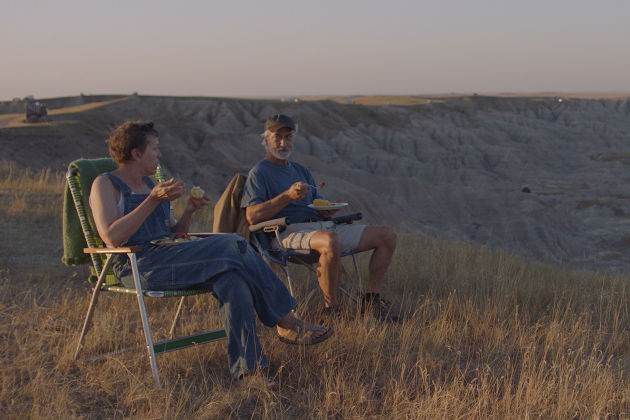
I didn't know much about Nomadland before I went to see it and it is testament to the lightness of touch employed by ChloĆ© Zhao, the writer and director, that I have thought about little else since watching it in that so longed-for 'social' darkness of the cinema.  The film, based on the non-fiction book of the same name by American journalist, Jessica Bruder, follows sixty-something Fern who, after losing her job and home and husband, joins a growing number of elderly US citizens choosing to spend their later years in camper vans, travelling the States, taking up work but always with a view to moving on and seeing more of the country.  It is a fascinating consequence of financial recession in a country that provides scant welfare for its vulnerable and ageing population.  Faced with the prospect of working until they drop dead because they cannot afford the traditional retirement, these people have formed their own movement that prioritises freedom and access to the natural world over paying off mortgages on houses that they only have time to sleep in.  Who knew that Amazon even runs a scheme, CamperForce, for the purpose of employing the van-dwelling elderly at times of high seasonal demand?  Given the presence of Amazon in the film, it felt as close to a documentary as the creative process can conjure.  McDormand, who plays Fern, is an actor of such natural, empathic and understated embodying of her characters that it would be hard to imagine any other actor of her generation coming close to pulling off Fern's stoicism and fearlessness.  Indeed, three of the 'characters' were actually played by themselves, so to speak.


Throughout the film, whose soundtrack was melodic but wistful piano by Ludovico Einaudi, I felt very sad.  At times, the rawness of the life of these people seemed too much to bear.  When Fern's van needs repairs and she doesn't have the money, we panic for her future.  But Fern, we learn, has a conventional sister, living in conventional suburbia with a conventional husband.  Said sister lends Fern the money for the van and even asks Fern to live with them.  This is not the only time in the film that Fern is offered accommodation of the walls-and-roof variety.  Each time she turns down these offers which forces us to realise that perversely as it may seem, Fern values her freedom and does not aspire to become rooted to a community.  This is the quiet brilliance of the film, it challenges ideas that are so entrenched we hardly know how to view a person who is houseless without feeling tremendous sympathy.  Even when the same person is time and again telling us, despite the hardships of their lifestyle, that this is what they choose, we cannot accept that it is so.  Old age, by which I mean the bit right at the end, is usually the denouement, even if it's implicit, of a lifetime's plot.  We want to think of the elderly safe and secure within the bosom of a warm and stable family. Anything else seems like an affront to civilisation.  But of course, that narrative is what we bestow on others from our youthful vantage point.  It does not allow for the autonomy of the group of people involved.  When I watched the film I chose to see it as an indictment of the American Dream but it is actually far more than that.  Certainly, it is far more original.  The film asks some big philosophical questions:  What is home?  Who decides?  And in a beautiful display of hope, Fern encounters the same people again and again as she travels her solitary path.  This in itself shows us that connection does not have to mean living side by side within a static community but trusting that the cyclical path of your travels will ensure that you encounter your friends, your community, when you need them.


Pondering on the film after watching it, I realise that there was a lot in there that was poignantly uplifting, even if I could not at first see it.  It would have been all too easy to politicise Nomadland.  Far harder to do what Zhao has done and simply shine a light and ask viewers to sit back and watch the stories playing out on the great stage of American landscape where big skies allow for big dreams, even after the age of sixty.


Thursday, 18 February 2021

Writers & Lovers by Lily King


I read a lot of historical fiction (see previous reviews) because stories from long ago feel like a more satisfying form of escapism, because I think the ability to make the past come alive in a way that feels authentic is a true talent but perhaps mostly because I feel that I might learn something.  To learn whilst being entertained; children will tell you that this is the holy grail of good education.


However, I love reading books set in the here and now.  I love to see the modern world that we live in reflected back at us.  I'm interested in how others interpret the zeitgeist.  If you study literature, you will definitely be fed the idea that the really great and brave novels of our time have something to say about our time.  We study Dickens as much for his social commentary as for his colourful characters and marauding plots.  And it is brave.  If you're writing about Tudor England and you get a detail wrong, the historians will pick you up on it but the creative writer can always fall back on the artistic licence argument.  But if you write about the contemporary you run the risk of your readers, en masse, shouting "This is not how it is!  We do not behave like this or talk like that!"  The stakes feel much higher; your only defence being, 'This is my vantage point and this is my view'.


I give this preamble to explain that I had been under the impression that Writers & Lovers was set in the present day.  I asked my daughter to to buy it for my birthday.  When she read the blurb, her response was, "Hasn't this been done before?"  And I said, "But has it ever been done here, now?"  I skim read some reviews and liked what I read but perhaps I was most excited by the prospect of a modern novel.  These are, after all, politically unprecedented times in the developed world and I was interested to see what would come out of such a talented writer as Lily King.  I was not expecting overt commentary in the style of Lionel Shriver or anything like that, I knew what the book was about but still, I felt a certain disorientation from too much historical fiction;  I wanted to feel grounded in now.  Normal People was criticised for allowing time and context so little shape but it felt modern.  It was a coming of age novel with its heart firmly grounded in the here and now, even if Sally Rooney does not reference a date.


It took me about a quarter of the novel to realise that events take place in the year 1997.  I know I'm spending quite a lot of time on this and I will move on because this is an exceptionally well-written novel but, 1997?  I couldn't work it out.  King has a lot to say about the USA and her story is a damning indictment of the metallic heart of corporate America that sees artists squeezed out of existence and education a luxury that must be weighted against potential earnings and of course, the kind of health insurance plan that might entitle you to.  Keily Reid in her recent debut, Such a Fun Age deals with a lot of the same themes but through the lens of a young black woman in modern day America.  Reid said in an interview with the Guardian that she is "not interested in reading or writing anything that doesn't comment on the world we live in".  Big words, and of course, our world is layered and the writer of historical fiction is not necessarily avoiding comment on 'the world we live in', in the same way that science fiction writers are choosing a particular creative path to showcase their ideas of the modern world.  I labour the point because I feel that this book would have been better if the arbitrary year of 1997 had been moved at least 20 years forward or perhaps, as was Rooney's choice, avoid a specific year altogether.  As the story unfolds I saw that there were some plot advantages to the setting.  For a start no-one seems to have a mobile phone, only answer machines.  This gives our protagonist, Casey, a more insular world in which to withdraw when her anxiety becomes overwhelming.  It also means that she is not obsessively watching her ex-boyfriend's movements on social media which, we feel, she would be likely to, fast forward twenty years.  Equally, pre the Me Too movement, a back story focusses on her teacher-father's Peeping Tom antics which are covered up by the school he works at and he is quietly 'retired'; something we can hope wouldn't happen these days.


However, to dwell on the setting of the novel is to miss its great strengths.  Writers & Lovers follows the life of unravelling Casey, who has faced the kind of set-backs that are not extraordinary (death of mother, rejection by boyfriend, debt, a medical emergency, stressful job and poor living quarters) but which, when combined, threaten to mercilessly swallow her whole.  So desperate are her circumstances that she considers moving in with her new boyfriend, an ageing writer whose career has seen better days and who says things like, "I am forty-seven years old.  I was supposed to be reading in auditoriums by now."  Oscar Kolton is such an extravagantly grotesque embodiment of corporate-accommodating, alpha-male diva that it is a sign of Casey's desperation that she ever seriously considers his offer to move in with him and be a mother to his children and an obliging lover, all rent free.


These are big themes that King is exploring and all while showing us, or at times, just educating us, on how to read books; how to really feel them.  This could feel didactic and King knows this but it is her talent for humour that saves the novel from being consumed by itself.  Early on, her Philistine landlord says, "I just find it extraordinary that you think you have something to say."  Men do not come out of Writers & Lovers well but they do serve as good fodder for humour, almost as if Lucky Jim had been turned on its head.  Casey muses that, "Usually a man in my life slows my work down, but it turns out two men give me fresh energy..."  


Our protagonist is unapologetically likeable.  We want her life to work out and when it does it is hugely satisfying.  I raced to the end, despite a voice in my head tut-tutting at the unrealistic, romantic denouement.  But Casey has been through so much, and it has been so sensuously rendered that we cannot begrudge her her happy ending.  The early part of the novel where we see how grief for her mother is preventing her from functioning, makes for such sad reading that I really felt the pain of grief myself.  Casey longs, at various moments throughout her day, to tell her mother about the events that unfold.  It is this longing, simply for conversation with a person we have lost, that is so striking and seems to shed some light on the creative life of a writer.  It seems to pose the questions, are we better writers if the books we write are conversations that we can no longer have with a living person?  Does the artist therefore need to suffer? Does the narrative have to come out somewhere, somehow....1997?