Tuesday, 8 June 2021

Alcohol: Some of the 'best' times you'll never remember?


Viognier, Whispering Angel, Aperol Spritz, Champagne, Negroni, Espresso Martini....


These have been some of my favourite tipples over the years but not now.  Now, you'll find me experimenting with mocktails, trying to find drinks that are not so sweet that you could only tolerate one in an evening.  The key is Everleaf Marine and I think you'll only know this if you've tried to go alcohol-free in the capital where this seems to be the go-to mocktail ingredient of the moment.

I am only 17 days into my sober odyssey but that is seventeen days that have included two lunches with friends, one fortieth birthday celebration and two weekends away (I know, my life!). Seventeen days would appear to be the point of evangelical enthusiasm for the crusade but keep reading, all the same. I am an aficionado of Dry January but my strategy during that dark month is to hibernate and turn down all social engagements.  A sort of penance where life is put on hold for four weeks by way of a sort of new year detox.  This time has been different because the calendar was full in a post-lockdown frenzy of social engagements.  Life was going to continue and I was going to say the words, calmly and assertively, "No thank you, I'm not drinking."  "No, really.  That's very kind but I'm not drinking at the moment."  "Really, you go ahead, I'm fine with my eighth Virgin Mojito!"

Except, when I was first required to assert myself, at my sister's 40th, the peer pressure was not forthcoming.  In fact, I found myself in a group where half of us was driving and the other half was not bothered one way or the other.  This was not what I was expecting and in fact, was in some ways, worse. I tried to encourage the non-drivers to drink.  I was close to ordering their drinks for them because otherwise I was going to find myself seated in a restaurant with other sober people who weren't drinking wine with their meal.  Was I part of a boring crowd? (horror face emoji) People might think we were Americans (horror face emoji) And here's the thing, as all these new-found prejudices came flooding out of me, it felt quite good.  It was a feeling, an honest part of a social anxiety that perhaps most of us have and certainly a lot of us choose to disguise by knocking back our first two drinks pretty quickly so that we are the dazzling company we believe others want us to be.  And if we could only stay two drinks up the whole night.  How we chase the two-drinks-up point of alcohol zenith that is so fleeting, the pursuit of which leads to unsteadiness, over-sharing and, once you sail past midnight, quite often, tears.  

But that is nothing when compared to the after-effects.  We call it a hangover which is a paltry name for an experience which is akin to being taken to the gates of death, with flashbacks, not of our life to date but just of the previous night.  We replay with an incessant paranoia the conversations that we think we might've had, all whilst asking ourselves, "Did I really say that.  Please, God, don't let me have said THAT!"  Perhaps you'll vomit, perhaps your head will explode, your hands might shake for at least 48 hours afterwards, you might go blind and lose the power of coherent speech and be left with nothing but wailing as a means of communication.  And if you've really misbehaved then you will get all those horrors together and eventually you will ask yourself the question, "Did I have fun?"

Inevitably, when you see your puffy and rapidly aging face in the bathroom mirror you will have to face your own existential defeat and admit that no, you had no fun.  You drank to numb the boredom and the anxiety but you did not have fun.  You do not even know what fun is anymore.  Because sure, it used to be dancing on tables but it's certainly not that anymore.  And once you start down that cerebral route of discovery, how the open road seems to twist and turn before you, offering more opportunities not fewer.  You can actually turn down the boring engagements.  You do not have to say yes to everything.  If you cannot face going to a particular party sober then, my friend, you probably do not want to be going to the party at all.  In short, you will have to find a new definition of fun and what with all those parties you're turning down, you'll have plenty of time for it.

What genuinely counts as fun at the moment is the smugness I feel when I don't drink.  After eating a delicious and bountiful meal at the Wolseley and, I must confess, nearly succumbing in a moment of weakness, I came out into the London dusk to find drunken revellers tumbling out of The Ritz, rowdy men swaying and shouting as they crossed the road looking for taxis or stumbling onto their next bar.  And how I breathed in that city air and thought about the uncomplicated night's sleep I was about to enjoy and the run I would go for when I woke up.  That was a high like no other.  That was, ladies and gentlemen, self-care.  No, I shall go further, that was SELF-LOVE and it felt really good.

I think, as we get older, we can feel desensitised to so much that happens around us.  A creeping cyniscism is an understandable part of ageing.  We feel it but we don't welcome it.  What is a midlife crisis if not a final fling with sentiment; a sometimes desperate desire to feel something before we lose that capacity altogether.  So it is that I am not so frightened of the social anxiety.  I do not want to numb that part of myself anymore.  I would like to see where it takes me.  I am ready to feel the uncomfortable emotions because I've an appetite for feeling that is mostly a curiosity about myself, long overdue.  Drinking is the age old way of fitting in.  It takes such a huge effort to try and be what we think others want of us.  Alcohol conspires by whispering that we can be whoever we choose with a few drinks inside us and I've had a good run.  I've drunk with the best of them, had some of the funniest nights of my life under the influence but now I choose to be me.

Tuesday, 18 May 2021

Nomadland

Film Commentary: "Nomadland" and Freedom's Call - A Realistic Look at a  Growing Subculture - The Arts Fuse


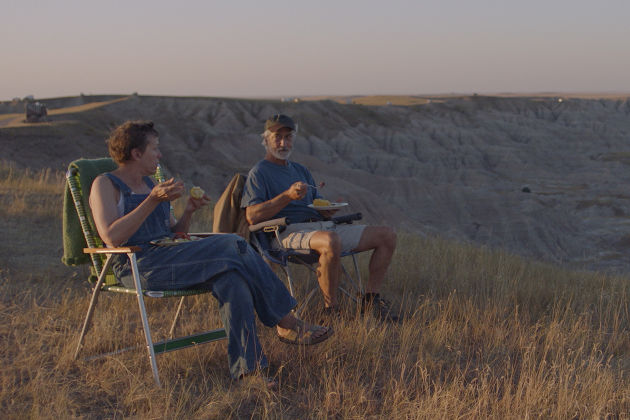
I didn't know much about Nomadland before I went to see it and it is testament to the lightness of touch employed by Chloé Zhao, the writer and director, that I have thought about little else since watching it in that so longed-for 'social' darkness of the cinema.  The film, based on the non-fiction book of the same name by American journalist, Jessica Bruder, follows sixty-something Fern who, after losing her job and home and husband, joins a growing number of elderly US citizens choosing to spend their later years in camper vans, travelling the States, taking up work but always with a view to moving on and seeing more of the country.  It is a fascinating consequence of financial recession in a country that provides scant welfare for its vulnerable and ageing population.  Faced with the prospect of working until they drop dead because they cannot afford the traditional retirement, these people have formed their own movement that prioritises freedom and access to the natural world over paying off mortgages on houses that they only have time to sleep in.  Who knew that Amazon even runs a scheme, CamperForce, for the purpose of employing the van-dwelling elderly at times of high seasonal demand?  Given the presence of Amazon in the film, it felt as close to a documentary as the creative process can conjure.  McDormand, who plays Fern, is an actor of such natural, empathic and understated embodying of her characters that it would be hard to imagine any other actor of her generation coming close to pulling off Fern's stoicism and fearlessness.  Indeed, three of the 'characters' were actually played by themselves, so to speak.


Throughout the film, whose soundtrack was melodic but wistful piano by Ludovico Einaudi, I felt very sad.  At times, the rawness of the life of these people seemed too much to bear.  When Fern's van needs repairs and she doesn't have the money, we panic for her future.  But Fern, we learn, has a conventional sister, living in conventional suburbia with a conventional husband.  Said sister lends Fern the money for the van and even asks Fern to live with them.  This is not the only time in the film that Fern is offered accommodation of the walls-and-roof variety.  Each time she turns down these offers which forces us to realise that perversely as it may seem, Fern values her freedom and does not aspire to become rooted to a community.  This is the quiet brilliance of the film, it challenges ideas that are so entrenched we hardly know how to view a person who is houseless without feeling tremendous sympathy.  Even when the same person is time and again telling us, despite the hardships of their lifestyle, that this is what they choose, we cannot accept that it is so.  Old age, by which I mean the bit right at the end, is usually the denouement, even if it's implicit, of a lifetime's plot.  We want to think of the elderly safe and secure within the bosom of a warm and stable family. Anything else seems like an affront to civilisation.  But of course, that narrative is what we bestow on others from our youthful vantage point.  It does not allow for the autonomy of the group of people involved.  When I watched the film I chose to see it as an indictment of the American Dream but it is actually far more than that.  Certainly, it is far more original.  The film asks some big philosophical questions:  What is home?  Who decides?  And in a beautiful display of hope, Fern encounters the same people again and again as she travels her solitary path.  This in itself shows us that connection does not have to mean living side by side within a static community but trusting that the cyclical path of your travels will ensure that you encounter your friends, your community, when you need them.


Pondering on the film after watching it, I realise that there was a lot in there that was poignantly uplifting, even if I could not at first see it.  It would have been all too easy to politicise Nomadland.  Far harder to do what Zhao has done and simply shine a light and ask viewers to sit back and watch the stories playing out on the great stage of American landscape where big skies allow for big dreams, even after the age of sixty.


Thursday, 18 February 2021

Writers & Lovers by Lily King


I read a lot of historical fiction (see previous reviews) because stories from long ago feel like a more satisfying form of escapism, because I think the ability to make the past come alive in a way that feels authentic is a true talent but perhaps mostly because I feel that I might learn something.  To learn whilst being entertained; children will tell you that this is the holy grail of good education.


However, I love reading books set in the here and now.  I love to see the modern world that we live in reflected back at us.  I'm interested in how others interpret the zeitgeist.  If you study literature, you will definitely be fed the idea that the really great and brave novels of our time have something to say about our time.  We study Dickens as much for his social commentary as for his colourful characters and marauding plots.  And it is brave.  If you're writing about Tudor England and you get a detail wrong, the historians will pick you up on it but the creative writer can always fall back on the artistic licence argument.  But if you write about the contemporary you run the risk of your readers, en masse, shouting "This is not how it is!  We do not behave like this or talk like that!"  The stakes feel much higher; your only defence being, 'This is my vantage point and this is my view'.


I give this preamble to explain that I had been under the impression that Writers & Lovers was set in the present day.  I asked my daughter to to buy it for my birthday.  When she read the blurb, her response was, "Hasn't this been done before?"  And I said, "But has it ever been done here, now?"  I skim read some reviews and liked what I read but perhaps I was most excited by the prospect of a modern novel.  These are, after all, politically unprecedented times in the developed world and I was interested to see what would come out of such a talented writer as Lily King.  I was not expecting overt commentary in the style of Lionel Shriver or anything like that, I knew what the book was about but still, I felt a certain disorientation from too much historical fiction;  I wanted to feel grounded in now.  Normal People was criticised for allowing time and context so little shape but it felt modern.  It was a coming of age novel with its heart firmly grounded in the here and now, even if Sally Rooney does not reference a date.


It took me about a quarter of the novel to realise that events take place in the year 1997.  I know I'm spending quite a lot of time on this and I will move on because this is an exceptionally well-written novel but, 1997?  I couldn't work it out.  King has a lot to say about the USA and her story is a damning indictment of the metallic heart of corporate America that sees artists squeezed out of existence and education a luxury that must be weighted against potential earnings and of course, the kind of health insurance plan that might entitle you to.  Keily Reid in her recent debut, Such a Fun Age deals with a lot of the same themes but through the lens of a young black woman in modern day America.  Reid said in an interview with the Guardian that she is "not interested in reading or writing anything that doesn't comment on the world we live in".  Big words, and of course, our world is layered and the writer of historical fiction is not necessarily avoiding comment on 'the world we live in', in the same way that science fiction writers are choosing a particular creative path to showcase their ideas of the modern world.  I labour the point because I feel that this book would have been better if the arbitrary year of 1997 had been moved at least 20 years forward or perhaps, as was Rooney's choice, avoid a specific year altogether.  As the story unfolds I saw that there were some plot advantages to the setting.  For a start no-one seems to have a mobile phone, only answer machines.  This gives our protagonist, Casey, a more insular world in which to withdraw when her anxiety becomes overwhelming.  It also means that she is not obsessively watching her ex-boyfriend's movements on social media which, we feel, she would be likely to, fast forward twenty years.  Equally, pre the Me Too movement, a back story focusses on her teacher-father's Peeping Tom antics which are covered up by the school he works at and he is quietly 'retired'; something we can hope wouldn't happen these days.


However, to dwell on the setting of the novel is to miss its great strengths.  Writers & Lovers follows the life of unravelling Casey, who has faced the kind of set-backs that are not extraordinary (death of mother, rejection by boyfriend, debt, a medical emergency, stressful job and poor living quarters) but which, when combined, threaten to mercilessly swallow her whole.  So desperate are her circumstances that she considers moving in with her new boyfriend, an ageing writer whose career has seen better days and who says things like, "I am forty-seven years old.  I was supposed to be reading in auditoriums by now."  Oscar Kolton is such an extravagantly grotesque embodiment of corporate-accommodating, alpha-male diva that it is a sign of Casey's desperation that she ever seriously considers his offer to move in with him and be a mother to his children and an obliging lover, all rent free.


These are big themes that King is exploring and all while showing us, or at times, just educating us, on how to read books; how to really feel them.  This could feel didactic and King knows this but it is her talent for humour that saves the novel from being consumed by itself.  Early on, her Philistine landlord says, "I just find it extraordinary that you think you have something to say."  Men do not come out of Writers & Lovers well but they do serve as good fodder for humour, almost as if Lucky Jim had been turned on its head.  Casey muses that, "Usually a man in my life slows my work down, but it turns out two men give me fresh energy..."  


Our protagonist is unapologetically likeable.  We want her life to work out and when it does it is hugely satisfying.  I raced to the end, despite a voice in my head tut-tutting at the unrealistic, romantic denouement.  But Casey has been through so much, and it has been so sensuously rendered that we cannot begrudge her her happy ending.  The early part of the novel where we see how grief for her mother is preventing her from functioning, makes for such sad reading that I really felt the pain of grief myself.  Casey longs, at various moments throughout her day, to tell her mother about the events that unfold.  It is this longing, simply for conversation with a person we have lost, that is so striking and seems to shed some light on the creative life of a writer.  It seems to pose the questions, are we better writers if the books we write are conversations that we can no longer have with a living person?  Does the artist therefore need to suffer? Does the narrative have to come out somewhere, somehow....1997?


Friday, 5 February 2021

The Testament of Mary, Colm Tóibín


Mary, like most women in the bible, is a two-dimensional character;  a womb was required, the womb was named Mary. Colm Tóibín, in his novella from 2012, aims to flesh out the character of Mary. Yes, a man seeks to do justice to the story of Mary. 

The author himself is completely absent from the narrative.  There is no explanation or back-story and so it is, in many ways, an exceptional retelling of a story that we already know.  The environment of Jerusalem feels authentic, as well as the oppressive stalking that Mary endures from her guardians, figures who are there to ensure that she is complicit with their narrative of Jesus as the son of God.  Mary eschews this interpretation of her son's provenance but does not offer any explanation for why her son is the chosen one.  This, for me, is the slight failing of the text.  The story begins, more or less, with the rumours of the rising again of Lazarus.  When Mary herself encounters Lazurus, she notes, in her own ambiguous way, which allows for belief and scepticism:

    '.. Lazarus, it was clear to me, was dying.  If he had come back to life it was merely to say a last farewell to it.'

  This sunset starting point is why the book is a novella.  But I would have enjoyed a fictionalised account of the full life of Mary.  I would have enjoyed her retelling of the birth of Christ.  But to go further back would have required more dramatic licence, would have been potentially more blasphemous.  So her story focusses on the final days of Jesus's life.  There are times when, as readers, we feel close to a real woman.  Her account of the sabbath when her son was young is strangely compelling.  The quietness exerting a hypnotic stasis which would wear off as the day retreated:

    'The idea that time was moving, the idea that so much of the world remained mysterious, unsettled me.  But I accepted it as an inevitable aspect of a day spent looking inward.  I was glad nonetheless when the shadows melted into darkness at sundown and we could talk again and I could work in the kitchen and think once more of the others and of the world outside.'

Said every woman walking back into the office after a weekend at home with her family.

It might be unfair of me but I struggled at times to take the whole premise of the book seriously.  Mary is mistress of the eye-roll, her sardonic interpretation of her son's rise to prominence, at times, made me chuckle.  When she finally seeks him out at the wedding at Cana, this is what she encounters:

    ''Woman, what have I to do with thee?' he asked, and then again louder so that it was heard all around.  'Woman, what have I to do with thee?'

    'I am your mother,' I said.  But by this time he had begun to talk to others, high-flown talk and riddles, using strange proud terms to describe himself and his task in the world.'

My God, I had no idea that this was the universal experience of owning a son.  The echo of 'pride comes before a fall' is striking and yet this dialogue is taken almost verbatim from gospel.  Even so,  Tóibín's Mary seems estranged from this fall, documenting the hammering of nails through her son's wrists and the breaking of his legs as if documenting an organic life process.

As the book nears its conclusion, Mary's scepticism becomes irate and her questions are the questions that the faithful and faithless alike must ask:

    ''Who else knows this?'

    'It will be known,' one of them said.

    'Through your words?' I asked.

    'Through our words and the words of others of his disciples.'

    'You mean,' I asked, 'the men who followed him?'

This nailing, if you like, of the definition of disciple is effective in reducing its meaning.  It is only something that the mother of Christ can get away with.  It feels to me as if Tóibín was saving it until the end because it encapsulates so much of the philosophical heart of the book.  Why give Mary a voice if it is not for these questions that only she can ask, as mother of Christ.

In the penultimate paragraph, Mary takes her own identity back to that of mother, of womb.  It is a clever, circular appropriation of what it is to be the physical, female host of life.  Tóibín uses Artemis as Mary's pagan deity, receptacle of her worship:

    'I speak to her in whispers, the great goddess Artemis, bountiful with her arms outstretched and her many breasts waiting to nurture those who come towards her.'

In so doing, the novella draws to a satisfying close, where Mary's experience is entirely her own, distinct from that of her infamous progeny.


Friday, 29 January 2021

Hamnet by Maggie O'Farrell


How does a writer bring the past to life?  Usually, by taking us into the minds of their characters so that we can say, "I recognise him... I would feel the same in those circumstances... I would behave just like that..."  But at the same time, much as we want to relate to characters, we want the landscape to be different; we want to know how it was in Tudor England.  We want the detail of the flagstones on the floor,  which was, Maggie O'Farrell tells us, her first stumbling block in imagining the life of Hamnet; the very reason she travelled down to Stratford from Edinburgh to visit Shakespeare's birthplace and see for herself the house where his son Hamnet spent his short life.

It is a precious book to read if you have spent most of your life in Stratford-upon-Avon.  Because you will think that you know the Bard.  You will have walked past those famous black and white buildings; his birthplace, his mother's house, his wife's family home, so many times that you won't see them anymore.  But a work of fiction such as Hamnet forces us to consider a new William Shakespeare; it gives us a glimpse of a domestic life that we have probably never considered.  It takes the facts and illuminates them from a different angle.  Did you know that Shakespeare and Anne married in Temple Grafton because young Will was, well, so young that they couldn't get a vicar to marry them anywhere else?  Imagine the walk to Temple Grafton.  Imagine all the walking in those lives.  Most likely, Shakespeare would've walked from London to Stratford and back, before his literary success enabled him the finances for swifter means of travel.  

O'Farrell possesses the great talent for bringing the past to life.  Just as Hillary Mantel manages in her historical novels, it is mostly to do with dialogue and inner voice.  It always rings true without ever sounding anachronistic.  It is at once natural and unnatural to modern day readers.  The tone of the prose is also fitting.  I could select so many passages to demonstrate this writerly skill but I am choosing the following because I wonder if you've ever considered Anne Hathaway and William Shakespeare having sex.  No, of course not, and yet, sex is so often written badly but in this extract, the words and the act are so artistically married;  the imagery is at once domestic, rural, even brutal; whilst the language is skilfully lubricated:

    'And now there is this - this fit.  It is altogether unlike anything she has felt before.  It makes her think of a hand drawing on a glove, of a lamb slithering wet from a ewe, an axe splitting open a log, a key turning in an oiled lock.  How, she wonders, as she looks into the face of the tutor, can anything fit so well, so exactly, with such a sense of rightness?'

How exactly?  Because it is Anne, or as she is named in the novel, Agnes, that the story really focusses on.  It is Agnes's thoughts that cross the pages and drive the story forwards.  Her son is the title character but he dies.  And the second half of the novel deals so sensitively, so exquisitely, with this son's absence that the following passage needs to be read over a few times.  I wept when I read it first because in it is captured the very nature of grief and how grief is built into houses just as memories come to us from smells.  This passage has made me long for the Birthplace Trust to open up again so that I can visit that house that I haven't been in since childhood school trips, and imagine the scene that Agnes too is imagining here, four years after her son's death:

    '...she would find them all as they were:  a woman with two daughters and a son.  It would not be inhabited by Eliza and her milliner husband, not at all, but by them, as they ought to be, as they would be now.  The son would be older now, taller, broader, his voice deeper and more sure of itself.  He would be sitting at the table, his boots on a chair, and he would be talking to her - how he loved to talk - about his day at school, things that the master had said, who was whipped, who was praised.  He would be sitting there and his cap would be hanging behind the door and he would say he was hungry and what was there to eat?'

'How he loved to talk'.....ah, such skill, to evoke the sentiment without the cliché, to give just enough detail that the mind's eye is satisfactorily furnished, without boring the reader with too much unnecessary history.  This is great writing and accomplished story-telling.

O'Farrell claims that her initial inspiration for the novel stemmed from a curiosity as to why Shakespeare, alive at a time when Plague featured greatly, never mentions the pestilence, as it was referred to then, once in all of his thirty-nine plays or one hundred and fifty-four sonnets.  Although we do not know for sure how Hamnet Shakespeare died, the Plague is a reasonable theory as it was recorded in Stratford at the time of his death, in August 1596.  The Plague was often at its most virulent in the hot Summer months.  O'Farrell's conclusion is that it was a deliberate omission on Shakespeare's part, that he was so traumatised by grief for his dead child that he could never bring himself to write of the pestilence that sporadically swept through the country and killed his only son.  It is a fair conclusion.  The play of 'Hamlet' is more difficult to ascribe to grief.  The novel's suggestion is that Shakespeare is re-writing history so that it is he who dies instead of his son but the near name troubles me and I think that link is more tenuous.  However, reading this novel some four hundred years after the events described, has been a sombre experience as we battle against our own pestilence.  Our means of controlling our twenty first century pandemic are not so different from the methods used in the 1590s: stay at home was the prescribed strategy then, as now.  In this way, the past seems more alive than ever.


Friday, 18 December 2020

Personal Reflections on COVID 19

 Should we seek to eliminate the risk of all physical harm?


We assess risk all the time; it is one of the things that makes us sentient beings.  We weigh up risks against each other, we calculate the risk of doing against the risk of not doing.  If we thought it was desirable to eliminate all risk, we would never get in a car, drink alcohol or play sport.  We could not live in cities because of the pollution but we could not live in the countryside because of the pesticides that are sprayed on the fields.  So how would we live if we sought to eliminate the risk of all physical harm?  We would stay within four walls most likely (well ventilated),  we would take a certain amount of steps a day (in circles) and we would eat only organic, plant-based food.  But it is easy to see the cost of removing all risk of physical harm.  We would be bored out of our minds, out of our four walls.  We would become depressed; our depression would manifest as lethargy, we would have no reason to get out of bed in the morning.  Far from thriving, we would not live long, healthy lives.  We would not be living at all.


At the beginning of this year we started to hear news of a virus of the Corona ('Flu') genus spreading through China.  By the beginning of April we were in national lockdown and I was in A & E with my four year old daughter.  She had the temperature and cough that three other family members, including myself, had suffered before her but in coughing so much, she had burst a blood vessel in her throat.  If you have never witnessed the amount of blood generated by a burst blood vessel, you would probably be as horrified as I was when she started bringing up huge clots into my useless, waiting hands.  However, the doctor in A & E was not overly concerned.  Believe it or not, this is a reasonably common occurrence when somebody is coughing a lot.  The doctor was in no doubt, "It's COVID,"  she asserted; although at that time, inexplicably, our country was not testing symptomatic people, so we cannot know for sure if the five members of our family of seven who experienced symptoms actually had the virus.  What we do know is that we are all well, even with our hair-raising trip to A & E in April, we have never been prescribed drugs or been admitted to hospital because of our suspected COVID symptoms.  And this is the reality of the risk posed by COVID for the vast majority of people.  Just like seasonal flu, COVID poses a particular risk to the elderly and vulnerable.  The average age of death from COVID is 82.  Of course, we are also hearing about so-called Long COVID which is a particularly frightening prospect because we understand so little about it.  Even so, the risk to the healthy remains small.


The lockdown in which we found ourselves through April, May and June was an attempt, as I saw it, to protect our health system from being overwhelmed by COVID cases.  We have a health system funded by the tax-payer, free at point of need, and so, if it is overwhelmed by the virus, that means that cancer patients, maternity wards, A & E departments would all be potentially damaged by a struggling NHS.  The first lockdown should have been about steeling the NHS; building new hospitals, recruiting more staff and acquiring more ventilators and PPE.  Despite the catastrophic damage to the economy of the first lockdown, it seemed a reasonable trade-off.  


However, we are now in December and fast-approaching Christmas and a brave new year.  Most of the country endures Tier 3 restrictions.  Our restaurants and hotels remain closed until further notice.  Stratford-upon-Avon finds itself in Tier 3, despite having infection rates lower than parts of Cornwall which remains in Tier 1.  Stratford is the fourth most damaged economy in the UK, which should come as no surprise, dependent as it is on the tourism, hospitality and catering industries.  That is a lot of people, young and at no real risk from COVID themselves, out of work and therefore not contributing to the economy and thus, the NHS.  A lot of the businesses for which they work, particularly small businesses, will not make it into the new year.  Did anybody ask this generation of young workers which risk they prefer?  The risk to their health and that of their elderly relatives, or the risk to their financial futures for many years to come.  They are a generation already disadvantaged by high property prices because each and every government seeks to keep inflated our precarious property bubble, not wanting it to pop on their watch but never addressing the root of the problem.  They are a generation that must pay £9,000 a year in tuition fees in order to gain a tertiary education but will then have to work for free or for below minimum wage on spurious internships simply in order to add something of value to their meagre CVs because the jobs aren't there.  And now, we have given them a recession  the likes of which we have not seen since we won the Second World War and had to rebuild our economy and country.  Poverty is another risk we might consider; it kills the vulnerable as well.


Now that we have started our programme of vaccination, it seems imperative that we return to some kind of normal.  But we are not.  The scientists warn us that the effects of the vaccine are not fully understood.  How immune will somebody be after one shot, after two?  What if the virus mutates?  The natural world is  full of these as yet unknown outcomes but again, we can make some sound assumptions; we usually do.  We assume that the sun will rise every day.  We carry on as if it will because it would take far too much time and energy to prepare each evening for a different outcome.  It would be counter-productive anyway. But it is indicative of the political environment of caution that we now inhabit, that the long-awaited vaccine is not propelling us back towards a fully functioning work-force or even education system.  The wearing of masks in public places is no great infringement of liberty; some people, I predict, will continue the mask-wearing long after the need prevails.  The elderly and vulnerable may need to shield for sometime to come and hand-washing is a good habit to have become fastidious about.  But to cripple our economy in order to achieve the impossible and eliminate all risk from COVID, this is safeguarding with catastrophic economic risks.  


Sunday, 6 December 2020

2020

The house had not been lived in for years and no maintenance carried out for just as long. It was falling down.  The house was freezing.  An estate agent might have said, “Has potential.”  But I couldn’t see the potential myself; the re-wiring alone seemed an impossible task.  In fact, I didn’t think it mattered if the house fell down.  In some ways, I thought it might be better for everyone if the house fell down because then nobody need be responsible for the house.  But one day, I realised that the house was still providing shelter for some; what would happen if it wasn’t there anymore?  Worse still, what if it came down when others were inside and were damaged in the process.  It wasn’t just a vainglorious project.  I started to see the potential.  Perhaps the house could be strong again; could be an inviting place where people wanted to be, where people felt happy and protected.


The task was massive though. Where to start?  It was hard to remember at times what needed to be done and in what order.  Real change is so hard to achieve.  It is not just a case of repainting the kitchen walls a bright colour and hoping then that everyone likes to be in the kitchen, hoping that they don’t notice that those same walls are crumbling and need re-plastering.  Real change takes consistent effort every day.  It means that maybe all the walls need to come down and be re-built from the ground up.  Choosing the colour of the paint is a long way off.


First, the house needs to be made secure because it has not been in the past; anyone has been able to come in and take what they want; to come in and take up residence and turn away the neighbours when they wanted to help.  But in making the house secure, it is important that the right people still have access.  The right people need to be given the key code so that they can come in and start to help with the rebuilding.


The attic has been neglected for a long time and will need to be thoroughly cleared.  It is frightening to think what might be up there. But you only have to look once in order to know what you’re up against.  Once you’ve looked and processed the work that is involved, it can’t shock you again. It’s not going anywhere, you can take your time and get a skip; pass some things on, make sure anything of value is stowed away safely and not thrown out with the rubbish.


The real challenge is the roof.  It needs completely replacing.  And there is such a temptation to do a botch job that could see you through the next couple of years.  But you’d never be happy.  You’d look up and be reminded of how strong the roof could be.  And you’d know that the time would come when the whole thing had to be replaced, probably because it would be threatening to fall in again. But then the negative voices start their campaign of doubt.  They say, but what if a hurricane comes when the roof is off?  The house will never withstand a hurricane without a roof; the risk is huge.  It’s true that whilst the roof is being repaired, the house is temporarily weakened. But in its current state, can the house withstand a hurricane?  It’s not guaranteed.  But imagine when that new, strong roof is in place.  Imagine what the house can withstand then; imagine how strong it will be. Keep thinking about that; there is nothing to lose.  Sure, you might need some scaffolding whilst the roof is being replaced and the neighbours will need to be particularly understanding but you can pay them back later; they will be so pleased that the house is finally standing firm and not being looted all the time.


Finally, when the house stands strong again, the decoration can be chosen.  Perhaps I will not want the bright colours, perhaps I will not want to cover the walls in art.  Perhaps I will be happy for the raw materials of the building to be on display, perhaps the very strength of the new building becomes its own beauty.  Or perhaps I will paint the kitchen orange.  It will be my choice.  The house will be so warm.